
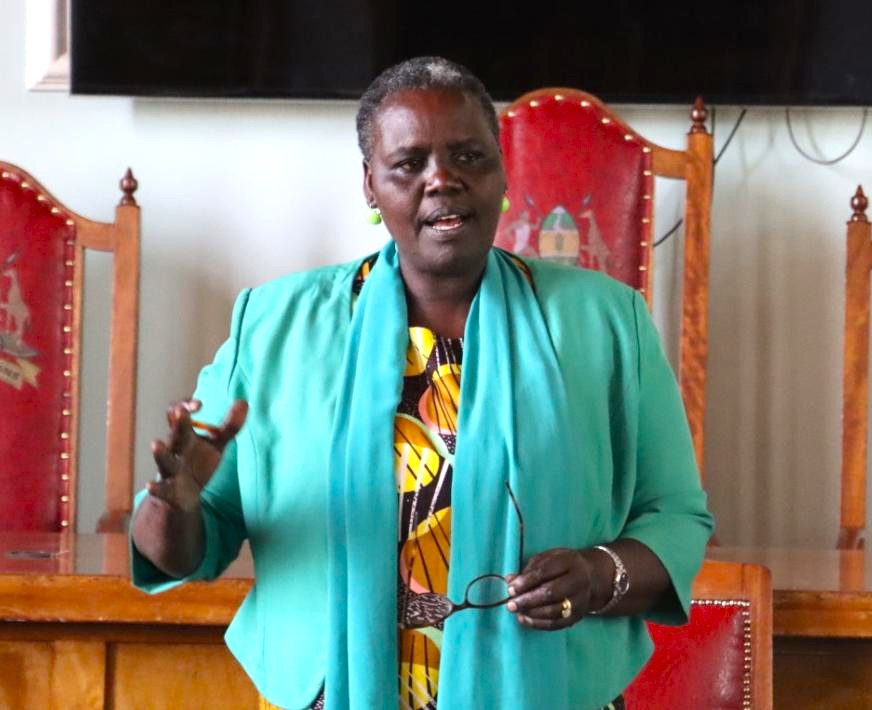
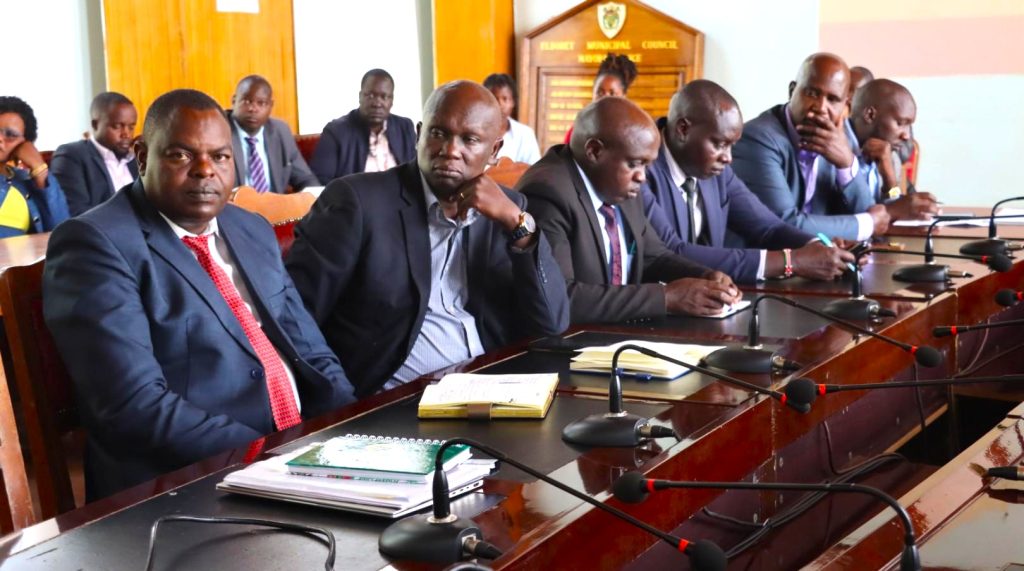
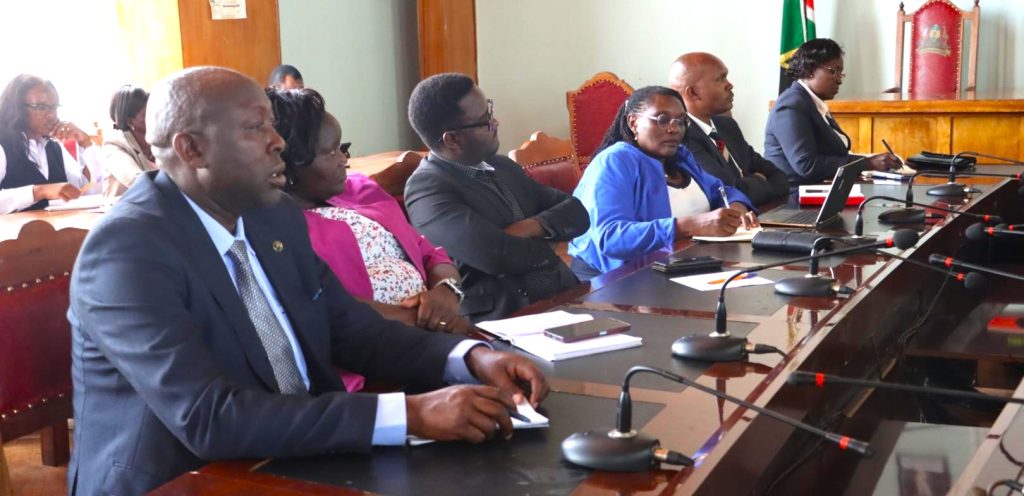
Uasin Gishu County Secretary Philip Meli met with Sub-county and ward administrators to bolster government representation and service delivery at the grassroots.
The meeting primarily focused on enhancing governance structures, improving service delivery, and strengthening accountability across all administrative units.
The County Secretary called on administrators to exercise authority responsibly and uphold high standards of professionalism within their offices.
He emphasized the importance of a strong code of conduct as a foundation for effective leadership and service delivery.



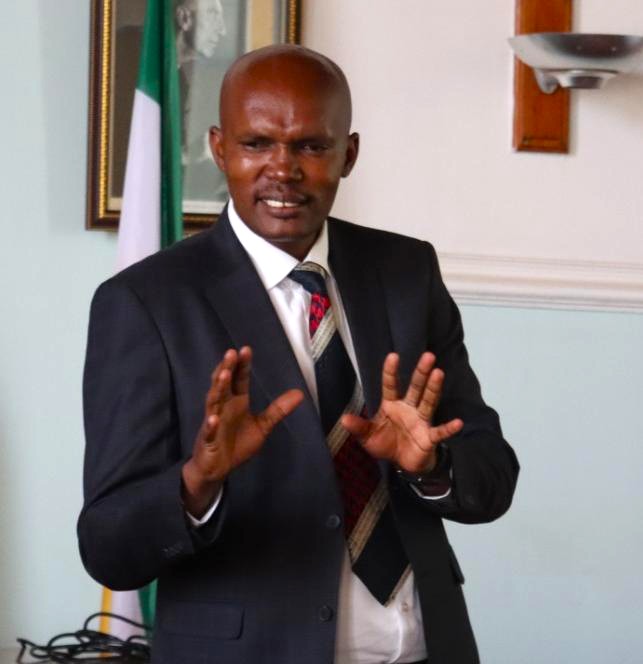

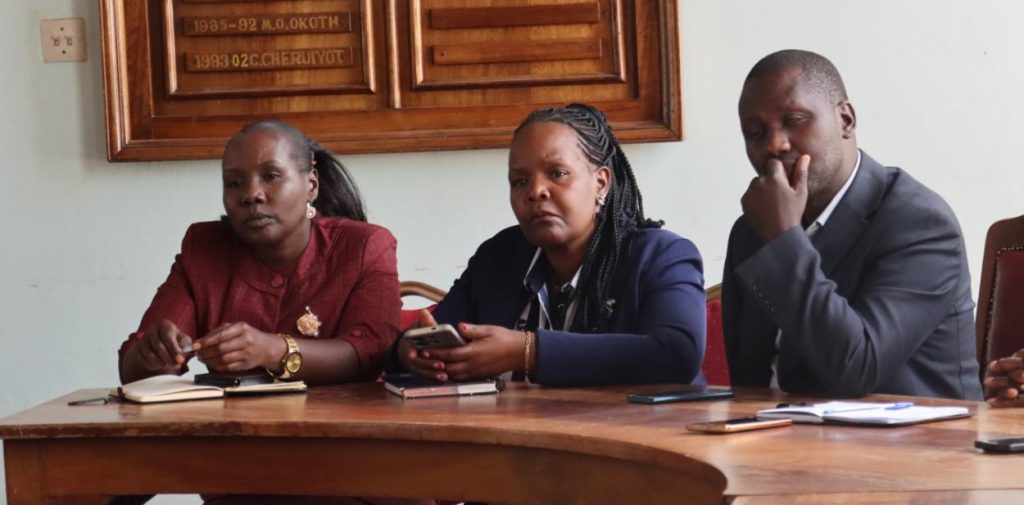

Mr. Meli further underscored the role of administrators in strengthening devolution and enhancing public participation, noting that effective engagement with citizens remains central to responsive governance.
He urged officers to ensure that government services are delivered efficiently and in line with established procedures, reinforcing trust between the public and leadership.
County Executive Committee Member of Devolution and Public Administration Mrs. Loice Murrey challenged administrators to fully embrace the “Nguzo Kumi” blueprint as a guiding framework for service delivery and governance at the grassroots level.
She encouraged officers not to shy away from responsibility but to take ownership of their roles in advancing county priorities.
She raised concern over the level of understanding and sensitisation of the Nguzo Kumi agenda within the wards, urging administrators to intensify awareness and implementation efforts.
Mrs. Murrey also cautioned officers to adhere strictly to the code of conduct, warning against any behaviour that may lead to reputational or professional embarrassment.
Chief Officer of Administration
Ruth Samoei reaffirmed the county’s commitment to supporting administrators in delivering their mandate effectively at the ward level.
She noted that the success of government programmes depends on strong coordination, mobilisation, and execution at the grassroots.
Samoei highlighted the importance of integrated performance management for administrators, noting that the Directorate of Training and Performance Management, led by Mr. Josephat Rotich, plays a key role in strengthening capacity and accountability.
CO Samoei emphasized the need for performance contracts as a tool to improve service delivery, ensuring that top-level managers are accountable for results and, in turn, cascade that accountability within their teams.
She further outlined the key stages of the performance contract process and what it entails, noting that clear targets and continuous evaluation are essential for achieving results-driven leadership.
Director of Administration, Samwel Kiptoo, reminded the officers of the importance of adhering to the rules and guidelines that govern behaviour, communication, and task execution within government structures.
The section directors were all present during the meeting.