
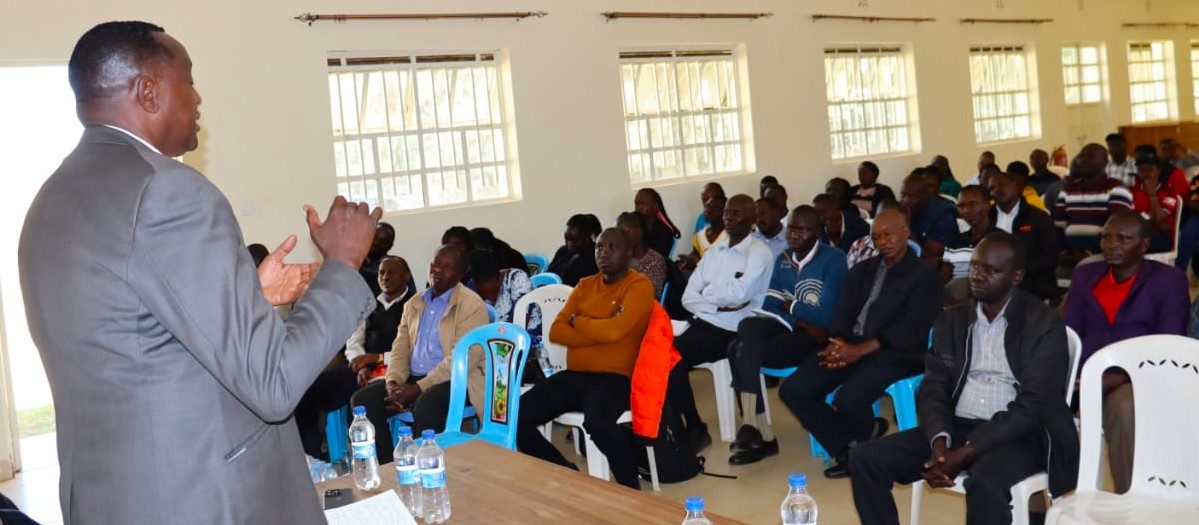
County Veterinary officers continue to play a critical role in disease surveillance, mass vaccination programs, and farmer education, ensuring that Uasin Gishu’s livestock sector remains healthy, productive, and resilient.
Their efforts in combating outbreaks as Foot and Mouth Disease (FMD), East Coast Fever (ECF), rabies, and other preventable diseases—alongside the rehabilitation of cattle dips and provision of extension services—have yielded tangible results. Notably, their professionalism and commitment contributed to the successful airlift last year of 50 in-calf Ayrshire heifers to Nigeria. This marked Uasin Gishu County’s first-ever export of live cattle to West Africa, a historic milestone for the county’s livestock industry.




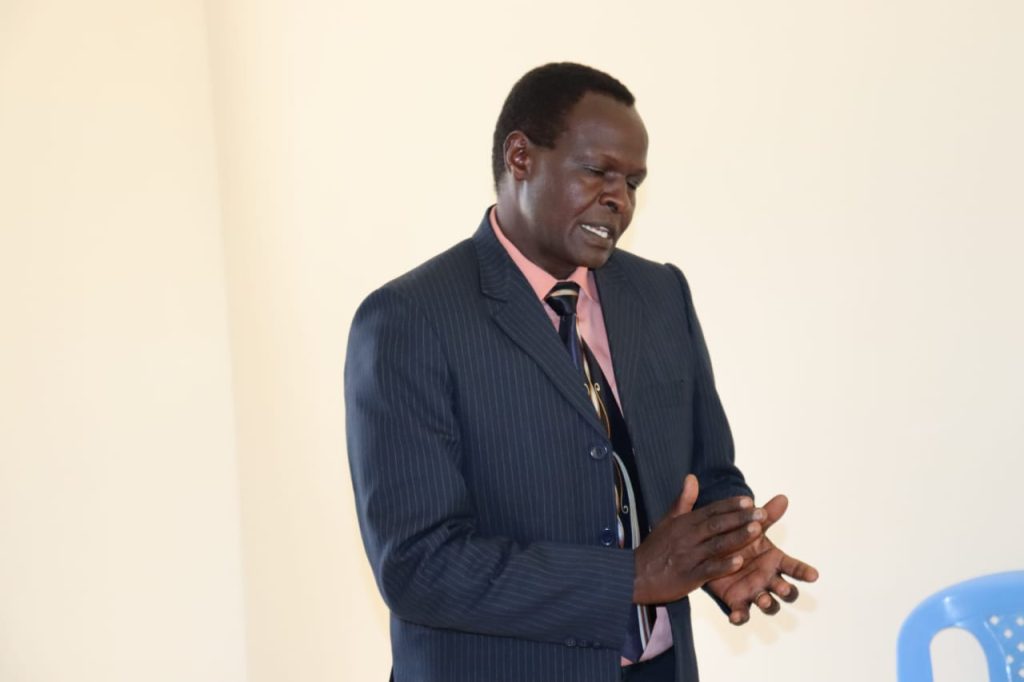



Speaking during a meeting that brought together more than 200 staff from the County Department of Veterinary Services, including meat inspectors, sub-county and ward veterinary officers, flayers, disease surveillance teams, and county leadership from the Directors’ office, CECM for Agriculture Dr. Sam Kotut reiterated the vital role played by veterinary officers in implementing the county’s animal health programs.
He lauded their dedication and professionalism, noting that their expertise in disease surveillance, vaccination, and farmer outreach has been instrumental in maintaining healthy herds and improving livestock productivity across Uasin Gishu.
Chief Officer for Agriculture Mr. Abraham Kiptalam emphasized the importance of sustained collaboration between county leadership and veterinary staff.
He noted that the officers’ professionalism, coupled with county investments in disease control, cattle dip rehabilitation, and breeding programs, has not only enabled milestones such as the historic heifer airlift but also positioned Uasin Gishu as a model county for livestock health management in Kenya.
Director of Veterinary Services Dr. Philip Biama praised the officers for their unwavering commitment to frontline livestock health services. He highlighted that the implementation of structured disease surveillance systems and timely vaccination programs has significantly reduced disease outbreaks and enhanced overall herd productivity.
Dr. Biama further encouraged continued innovation, teamwork, and adherence to best veterinary practices, noting that sustained dedication will ensure Uasin Gishu remains at the forefront of livestock health managementbenefiting farmers, the livestock industry, and the county’s economy